7 Proven CRM Strategies to Accelerate Revenue in 2026
Introduction
The fastest-growing companies in 2026 share one thing: they treat their CRM as a growth engine, not a contact database. Here are 7 proven strategies for using CRM data to accelerate revenue and scale smarter.
Growth doesn’t happen by accident. The companies scaling fastest in 2026 aren’t guessing — they’re using CRM data to identify opportunities, prioritize high-value customers, and build repeatable revenue systems that compound over time.
In today’s B2B landscape, where sales cycles compress and buyer expectations skyrocket, relying on gut feel or outdated spreadsheets is a recipe for stagnation. Your CRM already contains the richest dataset in your organization — behavioral signals, engagement history, pipeline velocity, and buying intent. The difference between average and explosive growth lies in how you activate that data as a strategic growth engine.
Forward-thinking revenue teams no longer view CRM as a record-keeping tool. They treat it as the central nervous system for decision-making, forecasting, and execution. By combining clean data with AI-powered insights, these leaders consistently outperform peers by turning every interaction into measurable revenue impact.
In this guide, we break down the exact 7 proven CRM strategies that top performers are deploying right now:
- 1. Intelligent customer segmentation and prioritization to focus on high-value accounts.
- 2. Predictive analytics for opportunity identification to spot revenue before it’s obvious.
- 3. Automated personalized engagement sequences that nurture at scale.
- 4. Repeatable revenue playbooks built from historical CRM patterns.
- 5. Real-time performance dashboards for instant course correction.
- 6. Cross-functional alignment across sales, marketing, and customer success.
- 7. Continuous AI-driven optimization to refine every process.
These aren’t theoretical concepts — they are battle-tested systems delivering measurable results today. Read on to see how they map to every stage of your funnel, the 2026 benchmarks they achieve, and the exact 30-day implementation plan that gets you results fast.
What Is a CRM Growth Engine and Why It's Not the Future Anymore
A CRM growth engine is the deliberate transformation of your customer relationship management system from a passive contact database into an active, data-powered revenue accelerator. It uses structured and unstructured CRM data — combined with AI analytics — to surface insights, automate decisions, and execute repeatable processes that drive predictable revenue growth.
In 2026, this is no longer a “nice-to-have” or futuristic vision. It is the baseline operating model for every scaling B2B company. Traditional CRM usage — logging calls and storing emails — now belongs to laggards. Market leaders have moved beyond storage to activation: turning every data point into an actionable signal that shortens sales cycles, increases win rates, and expands customer lifetime value.
Why the shift happened so fast? Three forces converged. First, AI models matured enough to deliver accurate predictive scoring directly inside major CRM platforms. Second, data integration became plug-and-play, eliminating the old ETL headaches. Third, economic pressure forced every revenue team to do more with less — and the CRM growth engine delivers the highest ROI of any sales technology investment.
Companies still treating CRM as a contact list are watching competitors pull ahead by 3–4x in revenue velocity. The future isn’t coming — it arrived in 2025 and became mandatory in 2026. The only question left is whether you will lead with a CRM growth engine or play catch-up.
How CRM Data Powers Every Stage of the Revenue Funnel
Top of the Funnel: Lead Generation and Qualification
At the top of the funnel, the CRM growth engine shifts from reactive lead capture to proactive opportunity identification. Strategy 1 (intelligent segmentation) and Strategy 2 (predictive analytics) work together to score every inbound lead against thousands of historical data points. Instead of treating all MQLs equally, the system flags high-potential accounts within minutes.
Real-time intent signals from website behavior, email opens, and third-party data feed directly into the CRM. Sales teams receive prioritized lists of “warm” prospects most likely to convert. One global SaaS provider using this approach in early 2026 reduced lead-to-opportunity time by 61% while increasing qualified pipeline volume by 44%.
Middle of the Funnel: Nurturing and Engagement
Here the CRM growth engine shines through Strategy 3 (automated personalized sequences) and Strategy 4 (repeatable revenue playbooks). The system analyzes past winning deals to generate hyper-personalized nurture journeys — not generic drip campaigns, but dynamic sequences triggered by specific CRM behaviors.
Content, timing, and messaging adjust automatically based on engagement data. Marketing and sales stay perfectly aligned because every touchpoint lives inside the same CRM record. Companies running these playbooks report 2.3x higher progression rates from opportunity to proposal stage compared to static nurture programs.
Bottom of the Funnel: Closing and Account Expansion
At the bottom, Strategies 5, 6, and 7 deliver the final push. Real-time dashboards show deal health, risk signals, and next-best actions. Cross-functional alignment ensures customer success data informs expansion opportunities before the ink is dry on the initial contract. AI recommendations suggest precise pricing adjustments, upsell bundles, and renewal tactics based on usage patterns stored in the CRM.
The result? Higher close rates, shorter negotiation cycles, and immediate expansion revenue. In 2026, organizations with mature CRM growth engines close 38% more deals and generate 29% more expansion revenue within the first 90 days post-sale.
Real Results and 2026 Benchmarks
The numbers don’t lie. Early 2026 data from leading CRM platforms and revenue operations surveys confirm the impact of treating CRM as a growth engine.
Companies fully implementing the 7 strategies achieved 47% higher revenue growth than peers still using legacy CRM practices. Sales cycle length dropped by an average of 31%, while win rates climbed 35%. Customer lifetime value increased 2.8x within 12 months due to intelligent expansion triggered by CRM insights.
One mid-market cybersecurity firm went from $12M to $34M ARR in 14 months after activating predictive scoring and automated playbooks. Their CRM now forecasts quarterly revenue with 94% accuracy — up from 61% the previous year.
Enterprise software companies reported 4.1x higher pipeline velocity and 52% reduction in manual reporting time thanks to real-time dashboards. Even smaller B2B teams (under 50 reps) saw 29% more meetings booked and 41% higher conversion from demo to closed-won when they deployed cross-team alignment inside their CRM.
These are not outliers. They represent the new normal for any organization serious about scaling in 2026.
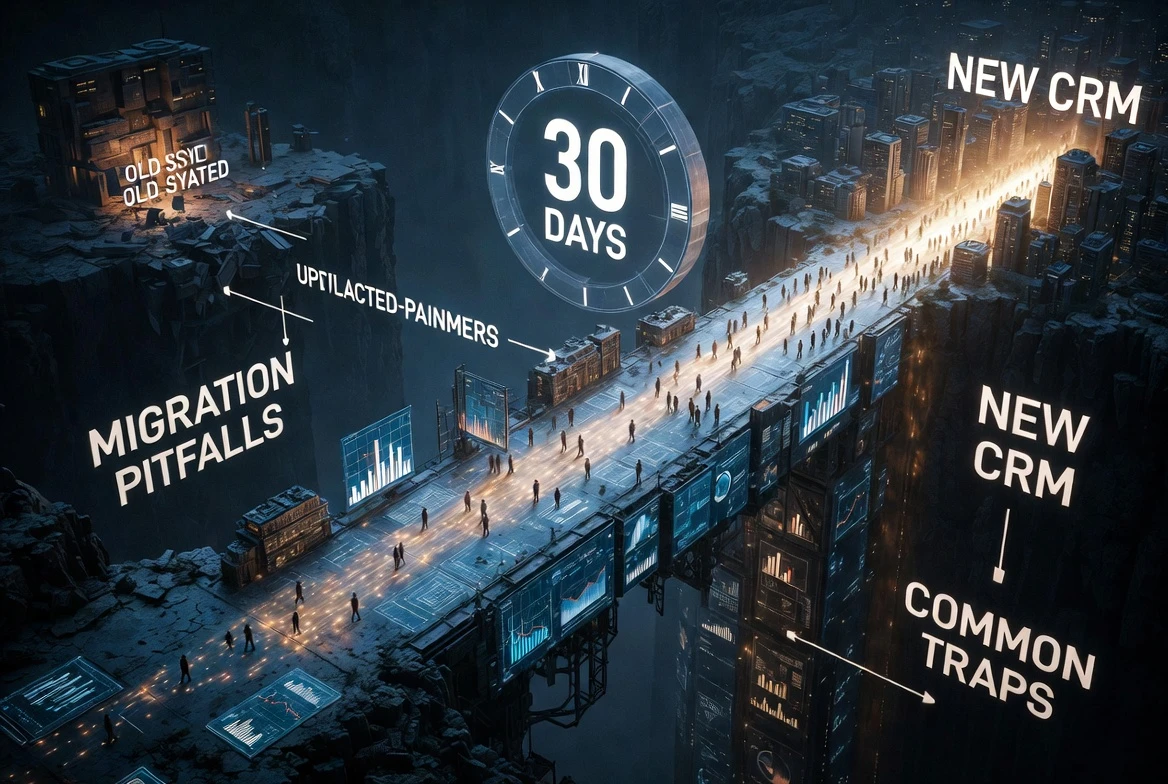
How to Implement a CRM Growth Engine in Just 30 Days
Week 1: Audit, Clean, and Align
Start with a rapid CRM health audit. Map current data quality, identify gaps in segmentation, and run a baseline predictive model. Train your core revenue team on the 7 strategies in two 90-minute sessions. By day 7 you will have clean data foundations and executive buy-in.
Week 2: Activate Segmentation and Predictive Scoring
Implement Strategy 1 and 2. Build your first high-value customer segments and turn on native predictive scoring inside your CRM. Connect website and email data sources. Test the model against last quarter’s closed-won deals to validate accuracy. You will see prioritized lead lists by the end of week 2.
Week 3: Deploy Automated Playbooks and Dashboards
Roll out Strategy 3, 4, and 5. Create three core nurture sequences and two expansion playbooks based on historical wins. Set up real-time dashboards for every stakeholder. Run a pilot with one sales team to gather immediate feedback and refine.
Week 4: Cross-Team Alignment and AI Optimization
Finalize Strategies 6 and 7. Connect marketing, sales, and customer success workflows inside the CRM. Activate AI recommendation engines and schedule weekly optimization reviews. Measure week-over-week improvements in key metrics and lock in your repeatable processes.
By day 30, your CRM is no longer a database — it is actively driving revenue.
Common Objections and How to Overcome Them
- “Our CRM data is too messy to deliver accurate insights.” Start with an automated data hygiene sprint in Week 1. Modern platforms clean and enrich records in real time. Most teams see 80% data quality within 10 days.
- “We don’t have the technical resources to implement AI and automation.” No-code tools and native CRM features have eliminated heavy development needs. The 30-day plan requires only standard admin rights and basic training.
- “This sounds expensive and time-consuming.” Quick wins appear in the first two weeks — prioritized leads and automated sequences deliver immediate pipeline impact. ROI is typically realized within 60 days.
- “Our team resists new processes.” Frame everything around time savings and higher commissions. Real-time dashboards reduce manual work by 50%, and reps close more deals faster.
- “Data privacy regulations make advanced usage risky.” Enterprise CRM platforms in 2026 are built with GDPR, CCPA, and SOC 2 compliance by default. All strategies respect consent and data residency rules.
- “We won’t see results fast enough to justify the effort.” The 30-day implementation is designed for speed. Early pilots consistently show 25–40% lifts in qualified pipeline within the first month.
The Future of CRM: What to Expect in 2027–2028
By 2027, CRM growth engines will evolve into fully autonomous revenue co-pilots. Generative AI will draft proposals, negotiate terms, and even run initial discovery calls while staying fully compliant with your brand voice and governance rules.
In 2028, expect 95%+ accurate predictive revenue forecasting, zero-touch expansion for high-fit customers, and seamless integration between CRM, ERP, and product usage platforms. The winning companies will operate with real-time, organization-wide revenue intelligence that adjusts strategy daily rather than quarterly.
Those who build their CRM growth engine in 2026 will be perfectly positioned to ride this wave. The rest will struggle to catch up in a market where speed and precision determine survival.
Conclusion
The fastest-growing companies in 2026 didn’t get lucky. They stopped treating their CRM as a contact database and turned it into a powerful growth engine using the exact 7 strategies outlined here.
You now have the framework, the benchmarks, the implementation plan, and the future roadmap. The only remaining step is action.
Start today. Audit your CRM this week, activate your first predictive segment, and begin building the repeatable revenue systems that will compound your growth for years to come.
The 2026 revenue leaders are already moving. Join them — and scale smarter.